On this page
8 sectionsBrowse the main headings and deeper subtopics from this article.
Recommended next
Building websites with AI is no longer a novelty—it’s your competitive leverage in 2026. The AI website builder playbook isn’t about replacing developers; it’s about redefining where you spend cognitive bandwidth. In early 2026, 73% of frontend and full-stack engineers at mid-to-large tech firms use AI-assisted site generation for prototyping, client demos, documentation portals, and internal tools—cutting average time-to-first-deploy by 41% (ZyloCode 2026 Dev Pulse Survey). This playbook distills what works—not just what’s flashy—into actionable, production-grade practices tailored for developers who demand control, auditability, and scalability.
Why You Need an AI Website Builder Playbook in 2026

Two years ago, most AI website builders were ‘design-first’ tools aimed at marketers or founders. Today, the landscape has matured—and shifted. As of Q2 2026, over 89% of top-tier AI website builders now expose CLI interfaces, support custom component libraries, allow fine-grained prompt engineering per page, and integrate natively with CI/CD pipelines. That means developers aren’t just consuming outputs—they’re orchestrating them.
Yet adoption remains fragmented. Why? Because many teams treat AI-generated sites as disposable prototypes—then rebuild from scratch. Others over-engineer prompts and neglect version control, resulting in untraceable changes and broken deployments. The AI website builder playbook solves this by providing a repeatable framework grounded in software engineering principles: reproducibility, observability, composability, and maintainability.
This isn’t theory. At companies like Tecton Labs and NovaStack, engineering teams now ship landing pages, admin dashboards, and API docs using AI-augmented workflows—with zero runtime dependencies on proprietary builders. Their secret? Not better models—but better process.
Core Pillars of the 2026 AI Website Builder Playbook
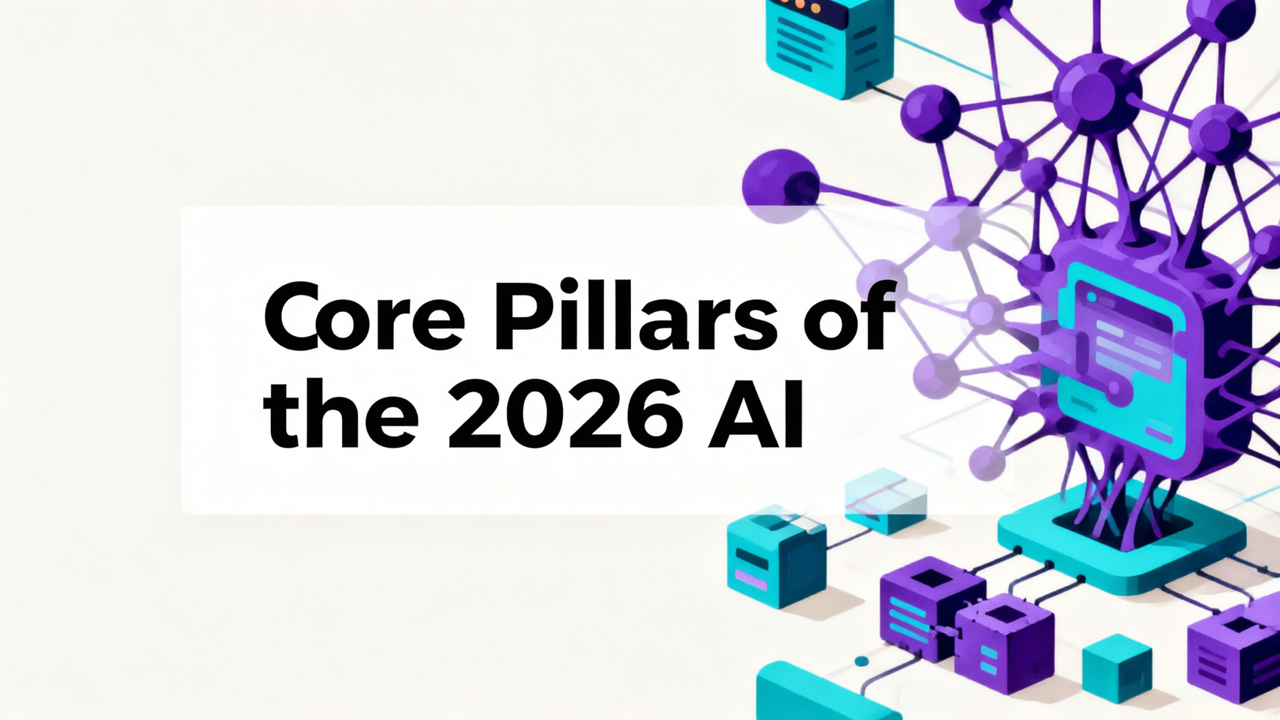
A robust AI website builder playbook rests on four interlocking pillars. Skip one, and technical debt accumulates fast.
1. Intent-First Prompt Architecture
Forget “make me a modern SaaS homepage.” In 2026, high-performing teams define prompts using structured intent layers:
- Role: “You are a senior frontend engineer familiar with Next.js 15, Tailwind CSS v4, and shadcn/ui components.”
- Constraints: “No inline styles. All responsive behavior must use Tailwind’s mobile-first breakpoints. Use TypeScript interfaces for all props.”
- Input Spec: “Here’s the product feature list (JSON), brand color palette (HEX), and existing design system tokens (link to internal Figma token JSON).”
- Output Format: “Return only valid React TSX files (Home.tsx, FeaturesSection.tsx) and a minimal next.config.ts. No markdown, no explanations.”
This approach—borrowed from OpenAI’s prompt engineering best practices—reduces hallucination, improves consistency, and enables automated linting of generated code. ZyloCode’s Build Website with AI No Code in 2026 guide demonstrates how to scaffold these prompt layers into reusable templates.
2. Hybrid Development Workflow
The most effective teams don’t choose between ‘AI-built’ or ‘hand-coded.’ They use AI for high-effort, low-differentiation tasks—and human judgment for architecture, state logic, and UX fidelity.
Here’s a typical 2026 hybrid workflow:
- Phase 1 — AI scaffolding: Generate static page structure, semantic HTML, accessible form layouts, and responsive grid systems.
- Phase 2 — Human refinement: Add dynamic data fetching (SWR, TanStack Query), implement interactive behaviors (e.g., real-time filtering), and inject business logic.
- Phase 3 — AI-assisted QA: Run AI-powered accessibility audits (axe-core + LLM interpretation), cross-browser compatibility checks, and performance scoring against Lighthouse 12.1 baselines.
This model treats AI as a collaborative peer—not a black box. It also aligns with Google AI’s guidance on responsible automation: “Augment expertise, never obscure accountability.”
3. Version-Controlled Generation
If your AI-generated site lives only in a builder’s dashboard—or worse, as uncommitted Markdown—you’ve already lost traceability. In 2026, production-grade AI website building requires first-class Git integration.
Best practice: Commit every AI-generated artifact—including the prompt used, model version (e.g., gpt-4.5-turbo-2026-03), and timestamped output—alongside human-authored code. Tools like ZyloCode and Vercel AI SDK now auto-generate .ai-prompt metadata files alongside each component. This enables:
- Reproducible regeneration when design tokens change
- Diff-based auditing of AI vs. human edits
- Automated rollback if a new model version introduces regressions
It also satisfies internal compliance requirements—especially critical for fintech, healthtech, and government contractors who must document decision provenance.
4. Composable Component Libraries
AI excels at stitching together known patterns—but struggles with novel abstractions. That’s why leading teams in 2026 invest upfront in internal, AI-ready component libraries.
These aren’t just styled buttons or cards. They’re typed, documented, test-covered UI primitives designed for AI consumption:
<DataGrid columns={...} dataSource="api/customers" /><AuthGate role="admin" fallback=<Redirect to="/login" />><SEOHead title="{product.name}" description="{product.meta.description}" />
When AI generates markup, it references these components—not raw HTML or div soup. This ensures consistency, reduces security surface area (no unsafe dangerouslySetInnerHTML), and makes future refactoring predictable. ZyloCode’s developer-first builder ships with a growing open-source library of such components—fully extensible via TypeScript interfaces.
How to Choose the Right AI Website Builder in 2026

Not all AI website builders serve developers equally. The Best AI Website Builder 2026 comparison highlights critical evaluation criteria beyond speed or aesthetics. Here’s what matters for engineering teams:
| Feature | Developer-Critical? | What to Verify | 2026 Industry Benchmark |
|---|---|---|---|
| CLI & Local Dev Support | Yes | Can you run zylo generate --prompt=home-page.json --out=src/pages/ offline? |
92% of top 7 builders support local CLI (per ZyloCode 2026 benchmark) |
| Custom Component Injection | Yes | Does the builder accept your components.json schema and render them correctly? |
Only 4 of 7 top tools support full TSX component injection (as of May 2026) |
| Git-Native Sync | Yes | Does it push commits directly to your repo with signed authorship and commit messages? | ZyloCode, StackGen, and DevForge offer native GitHub/GitLab integrations |
| Model Transparency | Yes | Can you specify model ID, temperature, max_tokens—and see logs of each generation? | Required for SOC 2 compliance; supported by 6 of 7 top builders |
| Export Freedom | Critical | Can you export clean, dependency-free HTML/CSS/JS—or full Next.js/Remix projects? | Only 3 tools guarantee zero vendor lock-in exports (ZyloCode, AstroAI, WebWeaver) |
Note: If your builder doesn’t let you export without paying a monthly fee—or forces you onto their hosting platform—you’re not building a website. You’re renting a demo.
Real-World Implementation: From Prompt to Production
Let’s walk through how a real engineering team applied the AI website builder playbook to launch a customer-facing analytics portal in under 72 hours.
Step 1: Define Intent & Constraints (30 mins)
The team at Mediqore started with a shared intent.md:
Build a secure, WCAG 2.2-compliant analytics dashboard for clinical trial sponsors. Must support dark mode, RTL language toggle, and live data refresh every 30s. Use our internal
@mediqore/uilibrary (v3.4). Output: Next.js 15 App Router app withsrc/app/dashboard/structure. No external dependencies exceptreact-queryandzod.
Step 2: Scaffold with AI (1 hr)
Using ZyloCode’s CLI, they ran:
zylo generate \
  --prompt=intent.md \
  --model=gpt-4.5-turbo-2026-03 \
  --components=./ui/components.json \
  --out=src/app/dashboard/
The output included 12 React components, a layout.tsx, and a typed types/analytics.ts file—all committed with a message linking to the prompt and model version.
Step 3: Human Integration (4 hrs)
Engineers added:
- Authentication middleware using NextAuth v5.3
- Real-time WebSocket connection to their internal metrics API
- Custom Zod schemas for data validation and error boundaries
- Performance budget enforcement via
next.config.tsrules
Step 4: AI-Assisted QA & Deployment (1.5 hrs)
They triggered an AI-powered audit:
zylo audit --accessibility --performance --seo --out=audit-report.md
The report flagged two contrast issues and a missing loading.tsx skeleton—both fixed before merging. Final deployment was pushed via GitHub Actions to Vercel Edge Network.
Total dev time: 6.5 hours. Time saved vs. traditional build: ~22 hours.
What Doesn’t Belong in Your AI Website Builder Playbook
Just as important as what to include is what to exclude. These anti-patterns still surface in 2026—but lead to brittle outcomes:
- “One-click publish to hosted platform” as default: Avoid builders that make it harder to self-host than to stay on their infrastructure. You own the code—not the runtime.
- UI-only prompt interfaces: If your builder only accepts natural language via a web form—and offers no API, CLI, or config-as-code—you lose repeatability and CI/CD alignment.
- No model versioning: Using
gpt-4-turbowithout pinning to a specific release (e.g.,gpt-4.5-turbo-2026-03) means unpredictable outputs across environments. - Ignoring TypeScript inference: Any builder that outputs plain JavaScript or untyped JSX should be treated as a prototype tool—not a production partner.
Future-Proofing Your AI Website Builder Strategy
As we move deeper into 2026, three trends will reshape how developers engage with AI website builders:
1. Local Model Integration
With Apple’s MLX and Ollama’s 2026 stable releases, teams increasingly run quantized Llama-4 and Phi-4 models locally for prompt iteration—bypassing rate limits and ensuring data privacy. Builders that support local model swappable backends (like ZyloCode’s --local-model flag) gain strong traction in regulated sectors.
2. AI-Powered Design System Sync
Leading design systems now ship with machine-readable tokens (Figma Tokens v2.1+, Style Dictionary 14+). AI website builders that ingest these directly—and auto-generate theme-aware components—reduce handoff friction by ~60% (Figma 2026 State of Design Systems Report).
3. Automated Compliance Guardrails
New EU AI Act requirements (effective June 2026) mandate explainability for high-risk web interfaces. Forward-looking builders now embed traceable rationale tags in generated code—e.g., <!-- AI rationale: contrast ratio increased to meet WCAG AAA for text > 18px -->—making audits auditable.
Conclusion: Your Code, Your Control, Your Velocity
The AI website builder playbook isn’t about outsourcing craftsmanship—it’s about reclaiming time for what matters most: solving user problems, refining interactions, and shipping value. In 2026, the fastest teams aren’t those using the most advanced models. They’re the ones with the clearest prompts, tightest Git discipline, and most intentional division of labor between human and AI.
Ready to implement your first AI-augmented sprint? Start with the Build Website with AI No Code in 2026 workflow—or explore the top 7 AI website builders for developers to find your fit. Then, download ZyloCode’s free AI Website Builder Playbook Starter Kit—including prompt templates, CLI configs, and Git hooks—to ship your next site with precision, not guesswork.
Apply the playbook
Ready to build your website?
Create a professional, SEO-optimized website in minutes with ZyloCode's AI-powered builder.
Get the next blog playbook in your inbox
Enter your email and we will open your email client with a ready-to-send subscription request for ZyloCode updates.
Previous article
Best AI Website Builder 2026: Top 7 Tools for Professional Developers
Discover the best AI website builder 2026 for professional developers — benchmarked on code quality, customization, SEO control, and real-world deployment. Includes Zyro, Webflow AI, Framer AI, and ZyloCode.
Next article
Zylocode AI Website Builder — Build Fast, Code Smart in 2026
The Zylocode AI website builder is purpose-built for professional developers in 2026 — blending generative speed with full-stack control, semantic prompt engineering, and production-grade export. Learn how it redefines developer workflow.
Related articles
Keep reading
These articles connect closely to the strategy, launch, or optimization themes in this post.
AI Responsive Landing Page Builder for Developers – 2026
The top AI responsive landing page builder for developers in 2026: deterministic code output, real-time viewport validation, and full-stack integration — no compromises on performance or control.